Cycling jerseys are designed to be close fitting. That much is obvious the first time you try one on.
But how tight is correct?
And when does performance fit cross the line into discomfort?
For many riders especially those transitioning from casual athletic wear to dedicated cycling apparel, jersey fit can feel confusing. It’s tighter than a standard T shirt. Shorter in the front. Longer in the back. The sleeves grip the arms. The fabric stretches.
It’s deliberate.
The truth is, cycling jersey fit isn’t about aesthetics. It’s about aerodynamics, moisture management, and stability in motion. The right fit improves performance quietly. The wrong fit distracts you for hours.
So let’s break it down properly.
Why Cycling Jerseys Are Designed to Be Fitted
Cycling is not a static sport. You lean forward. Your torso angles downward. Your back extends. Your arms rotate forward onto the bars.
Traditional athletic tops are built for upright posture. Cycling jerseys are built for forward motion.
A properly fitted cycling jersey does three essential things:
It reduces wind resistance.
It stabilizes rear pockets.
It manages sweat efficiently.
Loose fabric catches air. Even at moderate speeds, excess material flaps, creating drag and subtle instability. Over long distances, that inefficiency compounds.
Modern cycling clothing fashion reflects this performance first philosophy. Clean lines, structured cuts, and close silhouettes are not stylistic trends they are functional necessities.
The fitted profile is what gives cycling apparel its refined, purposeful look. It defines modern cycling clothing fashion while maintaining serious athletic intent.

What “Correctly Tight” Actually Feels Like
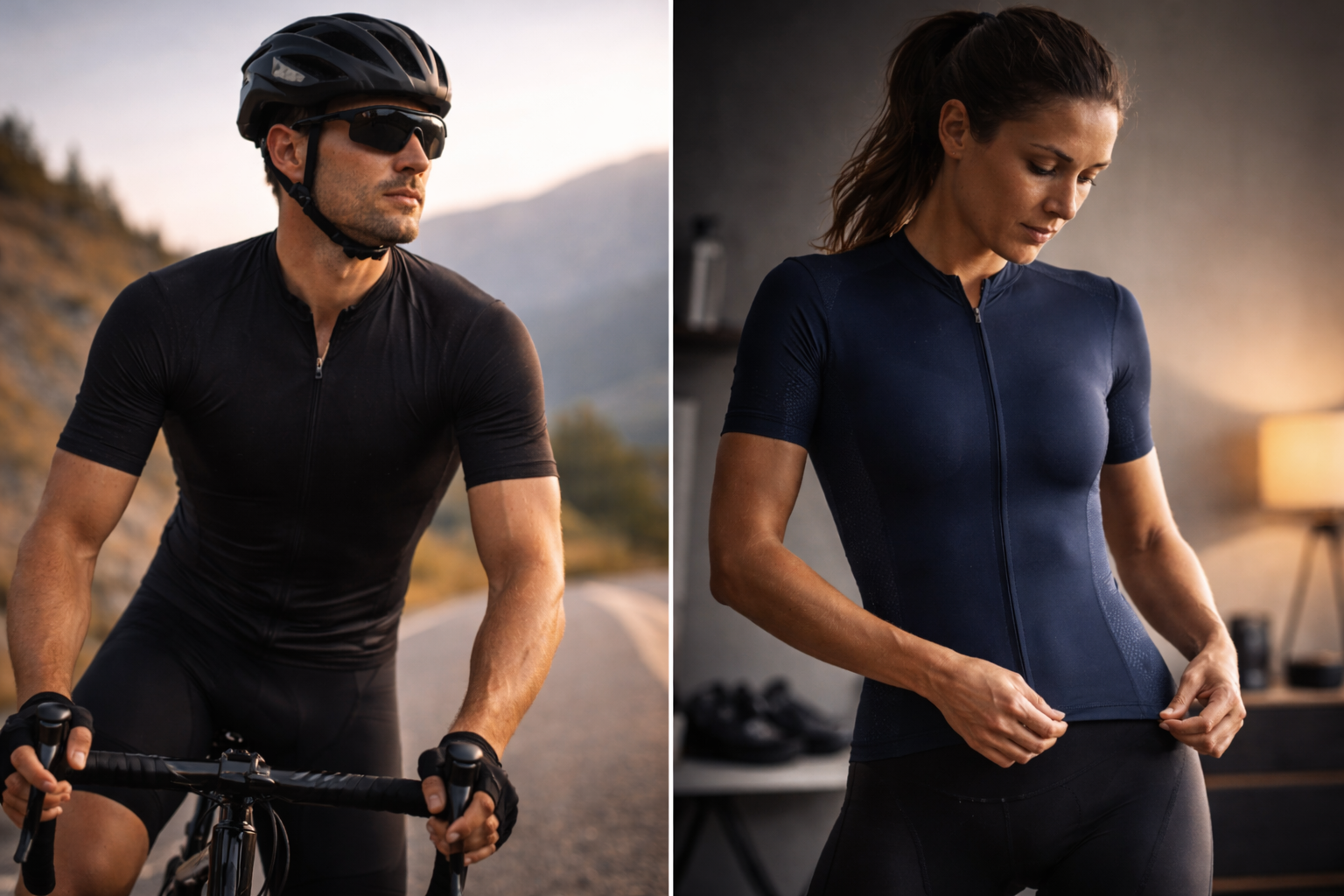
A cycling jersey should feel snug but not restrictive.
When you zip it up while standing upright, it may feel slightly short in the front. That’s intentional. Once you lean into riding position, the jersey aligns with your posture, covering the lower back fully while maintaining a smooth front profile.
Here’s what a correct fit typically feels like:
- Fabric lies flat against the chest and torso
- Sleeves lightly compress the arms without cutting circulation
- No loose material bunching at the waist
- Rear pockets sit high and stable
If you forget about it 20 minutes into the ride, it’s doing its job.
Signs Your Cycling Jersey Is Too Loose
An overly relaxed jersey may feel comfortable at first. But once you begin riding at pace, problems appear.
Loose fit issues include:
Fabric flapping in crosswinds.
Rear pockets sagging under weight.
Material bunching at the midsection.
Excess fabric collecting at the lower back.
Beyond aerodynamics, loose jerseys compromise pocket stability. A cycling T shirt with back pockets must hold tools, nutrition, or a phone securely. When the fabric lacks tension, pocket weight pulls downward, shifting the jersey mid-ride.
This creates friction and distraction.
Comfort in cycling isn’t softness it’s stability.
Signs Your Jersey Is Too Tight
Performance fit should never mean restriction.
An overly tight cycling jersey may:
Pull at the zipper.
Restrict deep breathing.
Create tension across the shoulders.
Dig into the sleeves or waistline.
If you feel compression interfering with movement rather than supporting it, sizing may be off.
The goal is aerodynamic tension not compression fatigue.
Race Fit vs Performance Fit vs Relaxed Fit
Not all cycling jerseys are cut the same. Understanding categories helps you choose correctly.
Race Fit
Designed for aggressive riding posture and high speeds, race fit jerseys are the most form-fitting. They minimize drag and sit close across chest, arms, and waist.
Ideal for:
Competitive riders
Structured training
Fast group rides
Performance Fit
Slightly more forgiving than race fit, performance fit balances aerodynamics with comfort. It maintains clean lines without feeling ultra-compressive.
Ideal for:
Endurance rides
Serious recreational cyclists
Long distance training
Relaxed Fit
More room through the torso and sleeves, often styled closer to a casual cycling shirt. Still functional, but less aerodynamic.
Ideal for:
Casual rides
Commuting
Urban cycling
For riders transitioning from standard athletic tops, performance fit is often the ideal entry point.

Why Fit Matters More on Long Rides
On shorter sessions, minor fit imperfections may go unnoticed. But beyond the first hour, small distractions become amplified.
A jersey that shifts slightly every few minutes becomes irritating. Sleeves that roll upward require constant adjustment. A sagging pocket pulls unevenly.
Proper fit eliminates micro distractions.
The best cycling apparel disappears once you begin riding.
That’s the standard.
How Fabric Technology Influences Fit
Modern cycling jerseys use high elasticity polyester blends engineered to stretch in multiple directions. This allows a close silhouette without stiffness.
Breathable mesh side panels increase airflow while maintaining structure. Moisture wicking fibers prevent the fabric from clinging heavily when saturated with sweat.
In premium men’s cycling shirts with pockets and women’s cycling jerseys, fabric recovery is key. Stretch should rebound immediately, maintaining shape over time.
Loose cotton tops absorb sweat. Technical cycling jerseys regulate it.
That difference defines serious cycling apparel.

How Tight Should Sleeves Be?
Sleeve fit is often overlooked.
Modern cycling sleeves typically extend slightly longer than traditional athletic shirts, finishing mid bicep. They should:
Sit flush against the arm
Avoid squeezing aggressively
Remain stable during motion
Silicone grippers or elastic hems prevent rolling. This stability improves aerodynamics and comfort simultaneously.
A properly fitted sleeve looks refined not restrictive.
How Tight Should a Women’s Cycling Jersey Fit?
Women’s cycling jerseys are tailored differently, accounting for:
Bust shape
Waist taper
Hip proportion
Shorter torso length
The same principles apply: snug, aerodynamic, stable but never restrictive.
A well designed women’s cycling jersey follows body contours without compressing them unnaturally.
Fit should feel athletic, not constricting.
Cold Weather Considerations
Layering changes fit dynamics.
If you plan to wear a base layer underneath, factor that into sizing decisions. Long sleeve cycling jerseys and cold weather cycling clothing often allow slight additional room for layering.
However, the outer jersey should still maintain structure. Excess bulk reduces insulation efficiency and creates wind drag.
The key is layered precision, not layered looseness.
Why Modern Cycling Jerseys Look Fitted (And Why That’s Good)
Cycling apparel has evolved. Today’s silhouettes are clean, technical, and streamlined. This aesthetic isn’t fashion driven it’s performance driven.
Casual cycling clothing with a refined edge reflects an understanding that performance and style are not opposites.
A properly fitted jersey enhances posture, sharpens profile, and reinforces movement. It looks intentional because it is.
Modern cycling clothing fashion is built around function first elegance second.

Common Sizing Mistakes Riders Make
The most frequent error is sizing up for comfort.
Riders accustomed to casual athletic wear often choose a larger size to avoid tightness. The result is compromised performance and pocket instability.
Another mistake is ignoring brand specific size charts. Cycling apparel, particularly performance fits, may run differently from general clothing.
Always measure chest circumference and compare to sizing guidance rather than guessing based on past purchases.
Precision matters.
The Psychological Impact of Proper Fit
There is a mental component to performance clothing.
When apparel fits correctly:
You feel sharper.
You move more confidently.
You maintain posture longer.
You ride with greater focus.
When clothing shifts or distracts, mental energy drains subtly.
Cycling is rhythmic. Anything that interrupts rhythm interrupts performance.
So, How Tight Should a Cycling Jersey Fit?
It should feel:
Snug but breathable.
Secure but flexible.
Stable but invisible.
You should notice it when you first zip it up and forget it entirely once you begin riding.
If it flaps, it’s too loose.
If it restricts breathing, it’s too tight.
If it moves with you seamlessly, it’s correct.
Investing in the Right Fit
A high quality men’s cycling shirt with pockets or women’s performance jersey is not just about material — it’s about cut, engineering, and movement alignment.
Well designed cycling jerseys:
Maintain shape ride after ride.
Support aerodynamic posture.
Keep rear pockets stable under load.
Balance breathability with structure.
The difference between average and refined cycling apparel lies in the pattern design.
And once you feel it, you rarely go back.
At Procyclistwear, we approach cycling apparel the same way serious riders approach training with intention and precision.
Our men’s and women’s cycling jerseys are engineered around real riding posture, technical fabrics and performance driven fit, designed to move seamlessly with you from the first mile to the last.